
Latest news
Digital Public Infrastructure (DPI)
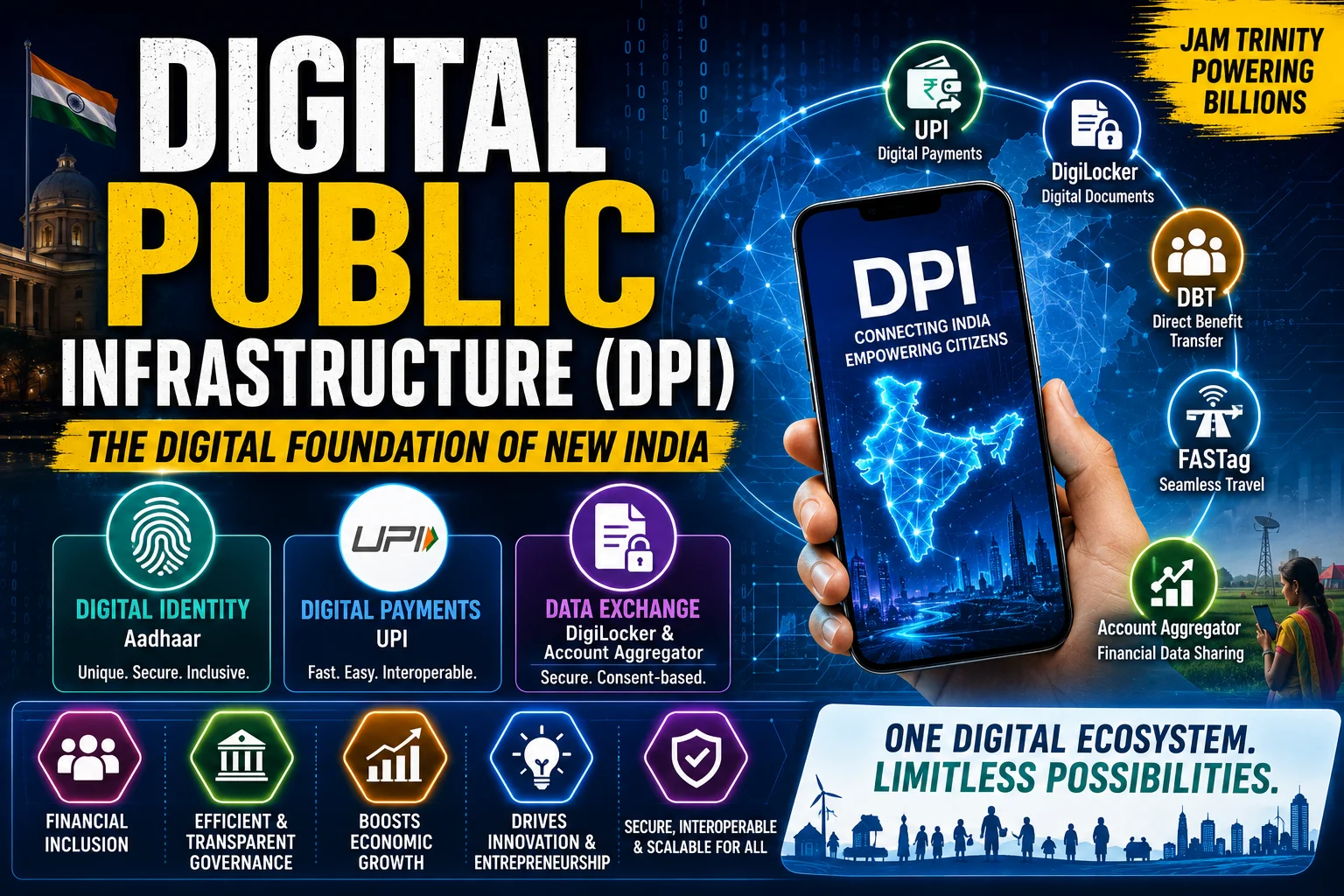
Digital Public Infrastructure (DPI): India's Digital Revolution Explained
India has emerged as a global leader in digital governance through the development of Digital Public Infrastructure (DPI). By integrating technology with public service delivery, DPI has transformed the way citizens access government services, make digital payments, and verify their identity. Today, India's Digital Public Infrastructure is regarded as a global model for inclusive and efficient governance, supporting economic growth while improving transparency and accessibility.
For UPSC aspirants, Digital Public Infrastructure (DPI) is an important topic under Governance, Economy, Science & Technology, and Current Affairs.
What is Digital Public Infrastructure (DPI)?
Digital Public Infrastructure refers to a set of secure, interoperable, and publicly accessible digital systems that enable citizens, businesses, and governments to interact efficiently. These digital platforms simplify service delivery, promote financial inclusion, and enhance transparency.
India's DPI is built on three key pillars:
-
Digital Identity – Aadhaar
-
Digital Payments – Unified Payments Interface (UPI)
-
Data Exchange – DigiLocker, Account Aggregator, and Digital Document Verification
Together, these platforms create a seamless digital ecosystem that supports governance and economic development.
Importance of Digital Public Infrastructure
Promotes Financial Inclusion
DPI has enabled millions of people, including those in rural areas, to access banking services, make digital payments, and receive government benefits directly into their bank accounts through Direct Benefit Transfer (DBT).
Improves Governance
Digital platforms reduce paperwork, eliminate middlemen, and improve transparency in the delivery of public services such as subsidies, pensions, scholarships, and welfare schemes.
Boosts Economic Growth
Digital infrastructure encourages innovation, supports startups, promotes digital commerce, and reduces transaction costs for businesses and consumers.
Enhances Ease of Living
Services like online document storage through DigiLocker, instant digital payments via UPI, and Aadhaar-based authentication have made everyday transactions faster, safer, and more convenient.
Key Components of India's DPI
Some of India's major Digital Public Infrastructure platforms include:
-
Aadhaar – Digital identity system.
-
Unified Payments Interface (UPI) – Instant digital payment platform.
-
DigiLocker – Secure digital document storage.
-
FASTag – Electronic toll collection.
-
CoWIN Platform – Digital vaccination management.
-
Account Aggregator Framework – Secure sharing of financial data with user consent.
These initiatives have significantly strengthened India's digital ecosystem.
Challenges
Despite remarkable progress, several challenges remain:
-
Cybersecurity threats.
-
Data privacy concerns.
-
Digital divide between urban and rural areas.
-
Limited digital literacy.
-
Need for stronger data protection and cyber resilience.
Addressing these issues is essential to ensure that digital services remain secure, inclusive, and accessible to all citizens.