
Latest news
France Gen Z Protests 2026
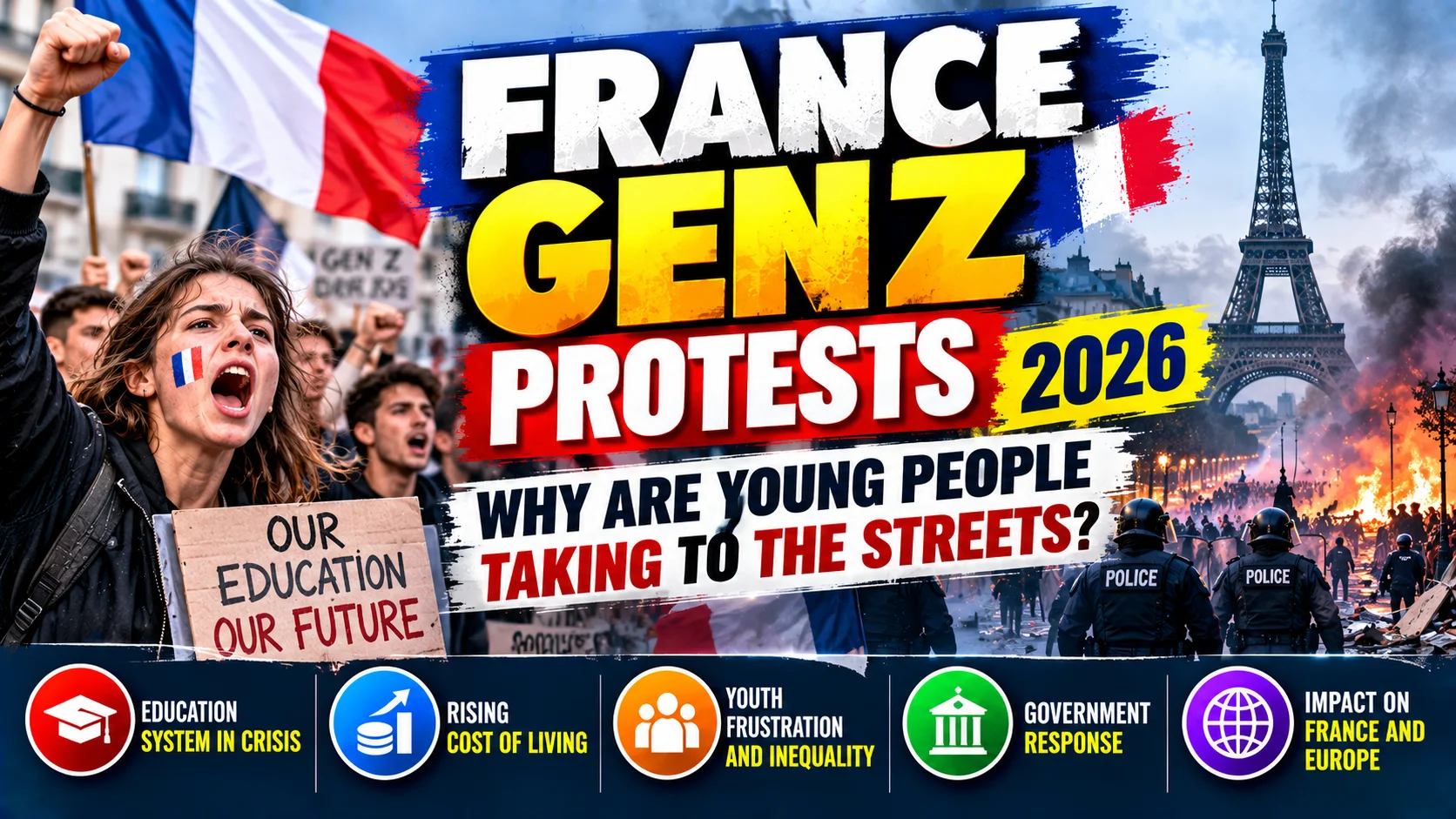
France Gen Z Protests 2026: Why Are Young People Taking to the Streets?
France is witnessing a major wave of youth-led protests that has grown from concerns about the education system into a broader expression of public frustration. Beginning in the Paris suburb of Créteil in September 2026, demonstrations by school students have spread to several parts of the country. The movement has brought attention to problems such as teacher shortages, overcrowded classrooms, deteriorating school buildings and the rising cost of living.
The protests have also raised questions about government accountability, public spending, police conduct and the future of young people in France.
What Started the France Gen Z Protests?
The immediate trigger was dissatisfaction with school conditions. Students complained about missing teachers, inadequate classroom facilities, demanding timetables and uncertainty surrounding access to higher education.
The protests gained momentum as videos and messages circulated on social media, encouraging students in other cities to participate. University students, parents, teachers and trade unions also joined the demonstrations.
Over time, the movement expanded beyond education. Rising living expenses, fuel prices and concerns about public services added to the anger. What began as a student-led campaign therefore developed into a wider expression of social and economic dissatisfaction.
Major Reasons Behind the Protests
1. Problems in the education system
Students have highlighted teacher shortages, overcrowded classrooms and poorly maintained school buildings. They argue that inadequate educational facilities affect learning opportunities and equality.
2. Rising cost of living
Higher household expenses and pressure on family budgets have contributed to wider public frustration. Young people are particularly concerned about their future financial security and access to opportunities.
3. Concerns about inequality
Many protesters believe that access to quality education and future employment opportunities should not depend heavily on a person's social or economic background.
4. Discontent with public services
The protests reflect concerns about the availability and quality of essential public services. Education has been the initial focus, but the movement has expanded to include broader questions about government priorities and spending.
5. Police response and civil liberties
Clashes between demonstrators and security forces have intensified tensions. Students and rights advocates have criticised the use of force, while the government has emphasised the need to prevent violence and protect public property. It is important to distinguish peaceful demonstrators from individuals involved in arson, looting or other criminal acts.
Government Response and Latest Developments
The unrest escalated significantly during the nationwide demonstrations of 17 October 2026. Reports published on 19 October indicated that around 2,400 people had been arrested following widespread disorder, with thousands of businesses affected and public buildings damaged.
President Emmanuel Macron condemned the violence and called for accountability. Prime Minister Sébastien Lecornu supported localised curfews and stronger measures to protect people and property. The government also faced criticism over its preparation for the demonstrations and its handling of public order.
These developments show the difficulty of addressing genuine public grievances while preventing violence and maintaining democratic freedoms. The situation remains politically sensitive, particularly as France approaches its next presidential election.
What Do the Protests Mean for Europe?
The protests highlight challenges faced by governments across Europe, including the affordability of education, economic insecurity, public-sector funding and declining trust in institutions.
Social media has helped young people share experiences, organise demonstrations and draw national attention to local problems. However, digital mobilisation can also accelerate the spread of misinformation and intensify confrontations.
For governments, the central challenge is to respond constructively to peaceful demands while ensuring public safety and respecting civil liberties.
UPSC and State PCS Relevance
The France Gen Z protests are relevant to several competitive-examination topics:
-
Indian Polity and Governance: Accountability, public order and democratic participation.
-
International Relations: Political and social developments in Europe.
-
Society: Youth movements, inequality and social media mobilisation.
-
Essay and Mains: Education reform, public expenditure, social justice and the balance between protest and public order.
Aspirants preparing through Top UPSC Coaching in Chandigarh, Best UPSC Coaching in Chandigarh, Top IAS Coaching in Chandigarh or Best IAS Coaching in Chandigarh should connect such events with broader concepts rather than memorising isolated facts.
The issue is equally useful for candidates exploring Top Civil Services Coaching in Chandigarh, Best HCS Coaching in Chandigarh, Top HCS Coaching in Chandigarh and Best PCS Coaching in Chandigarh, particularly for current-affairs revision and analytical answer writing.
Conclusion
The France Gen Z protests demonstrate how dissatisfaction with education can develop into a wider debate about economic security, inequality and governance. Although the movement has witnessed serious incidents of violence, its underlying issues also raise important questions about the opportunities available to young people.
For civil services aspirants, the key lesson is to examine both the immediate triggers and the deeper structural causes of a protest. Understanding these connections is essential for developing balanced perspectives on contemporary international affairs.
Grace IAS Academy, Chandigarh, encourages aspirants to study current affairs through conceptual understanding, regular revision and analytical practice for UPSC and State Civil Services examinations.