Organisation
Green Energy Corridor Phase-III
Green Energy Corridor Phase-III: India’s Big Push for Renewable Energy
India has taken another important step towards clean energy development. On 30 September 2026, the Union Cabinet approved Green Energy Corridor Phase-III (GEC-III), a major initiative designed to strengthen electricity transmission networks and improve battery storage infrastructure across states and Union Territories.
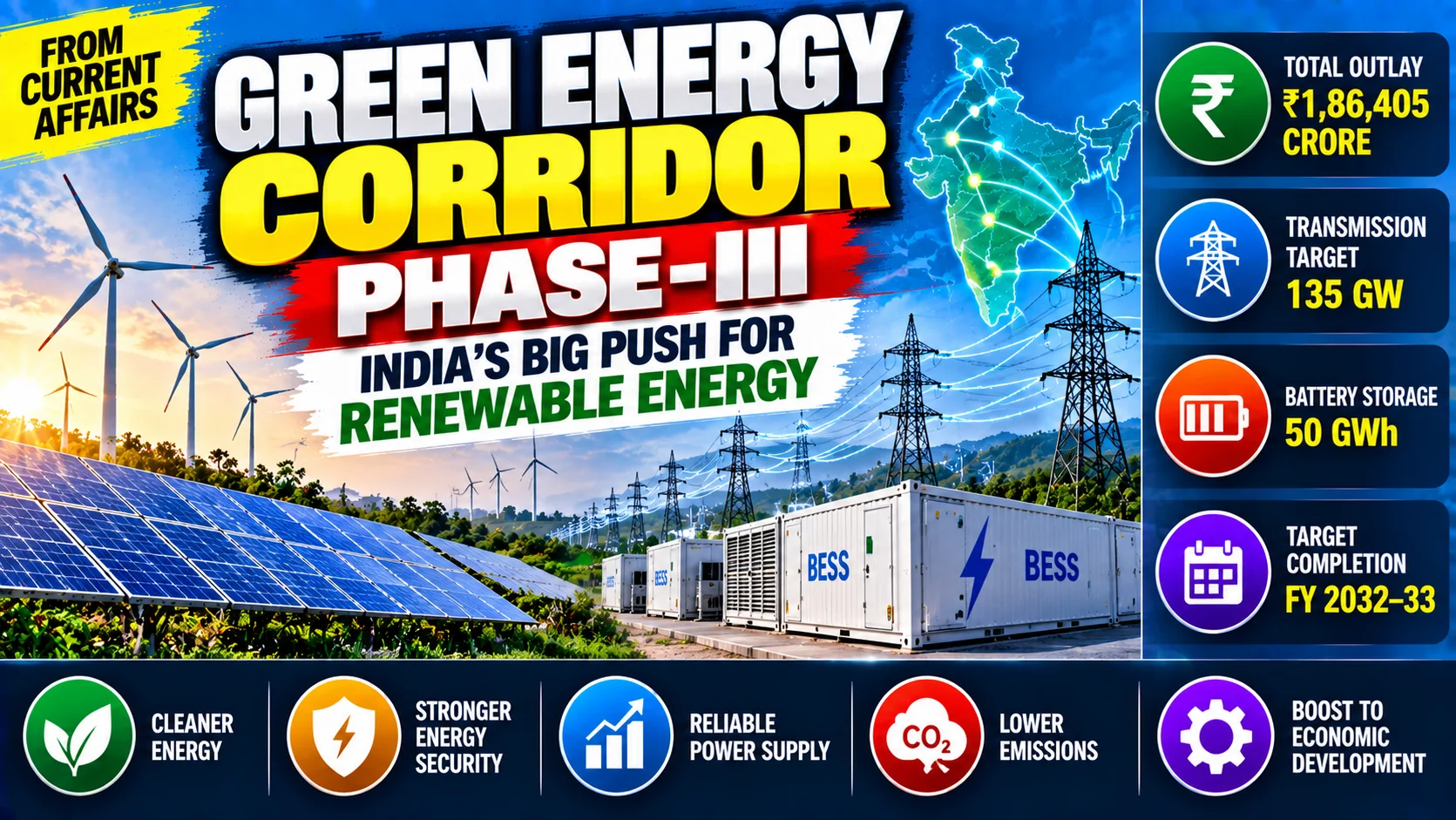
The scheme has a total outlay of ₹1,86,405 crore and aims to facilitate the transmission of up to 135 gigawatts (GW) of renewable energy. It also includes 50 gigawatt-hours (GWh) of Battery Energy Storage Systems (BESS). The initiative is important for India’s energy security, climate commitments and long-term sustainable development.
What Is the Green Energy Corridor?
The Green Energy Corridor is an initiative to develop the electricity transmission infrastructure needed to connect renewable energy generation with consumers.
India is expanding its solar and wind energy capacity, but producing clean electricity is only one part of the challenge. Electricity must also be transmitted efficiently from renewable energy projects to homes, industries and commercial centres.
The third phase, GEC-III, focuses on strengthening intra-state transmission systems. This means improving electricity networks within individual states and Union Territories so that renewable power can be integrated more effectively into the national grid.
Key Features of GEC-III
The scheme has three major components:
-
Total project outlay: ₹1,86,405 crore.
-
Intra-state transmission infrastructure: ₹1,36,378 crore.
-
Battery energy storage: ₹50,000 crore for 50 GWh of storage capacity.
-
Renewable energy transmission target: Up to 135 GW.
-
Target completion: Financial year 2032–33.
These investments are intended to improve grid flexibility, reduce transmission congestion and help electricity systems manage fluctuations in renewable power generation.
Why Does India Need Battery Energy Storage?
Solar and wind power depend on natural conditions. Solar panels generate electricity during daylight, while wind power varies with wind speed. Electricity demand, however, continues after sunset and may rise during peak hours.
Battery Energy Storage Systems can store electricity when generation is available and release it when required. They can help address:
-
Fluctuations in renewable energy generation.
-
Electricity demand during non-solar hours.
-
Congestion in transmission networks.
-
Curtailment of renewable power.
-
The need for a more flexible electricity grid.
However, batteries alone cannot solve every grid problem. India will also need efficient transmission planning, suitable storage technology, timely project execution and responsible battery recycling.
Why Is This Important for India?
1. Energy security: Greater integration of domestic renewable energy can help diversify India's electricity supply.
2. Climate commitments: Renewable energy infrastructure supports India's broader efforts to reduce the emissions intensity of its economy.
3. Economic development: Investment in transmission networks and storage can create opportunities in construction, engineering, manufacturing and energy services.
4. Reliable electricity: Better grid infrastructure can help deliver electricity from renewable energy projects to areas where it is needed.
5. Sustainable development: Stronger transmission and storage systems can help India expand clean electricity without relying entirely on conventional power generation.
UPSC and State PCS Examination Relevance
For UPSC Prelims, remember these important facts:
-
Scheme: Green Energy Corridor Phase-III.
-
Approval: 30 September 2026.
-
Transmission target: 135 GW of renewable energy.
-
Battery storage: 50 GWh.
-
Total outlay: ₹1,86,405 crore.
-
Target completion: FY 2032–33.
For UPSC Mains GS-III, the topic connects with renewable energy, infrastructure, environmental protection, energy security and sustainable development.
State PCS aspirants should also understand how electricity transmission, renewable energy investment and grid modernisation contribute to economic development.
Conclusion
Green Energy Corridor Phase-III highlights an important lesson: India’s clean-energy transition requires more than installing solar panels and wind turbines. It also needs reliable transmission networks, energy storage and effective coordination between the Centre and states.
The success of the scheme will depend on timely implementation, efficient use of funds and the ability to integrate renewable electricity into the power grid.
Prepare for Civil Services with Grace IAS Academy
Grace IAS Academy provides structured preparation support for UPSC and State Civil Services examinations, with an emphasis on conceptual clarity, current affairs, test practice and personal mentorship.
Aspirants searching for Top IAS Coaching in Chandigarh, Best IAS Coaching in Chandigarh, Top UPSC Coaching in Chandigarh, Best UPSC Coaching in Chandigarh, Top Civil Services Coaching in Chandigarh, Best HCS Coaching in Chandigarh, Top HCS Coaching in Chandigarh and Best PCS Coaching in Chandigarh can explore the courses and preparation support offered by Grace IAS Academy.