
Latest news
Uniform Civil Code (UCC)
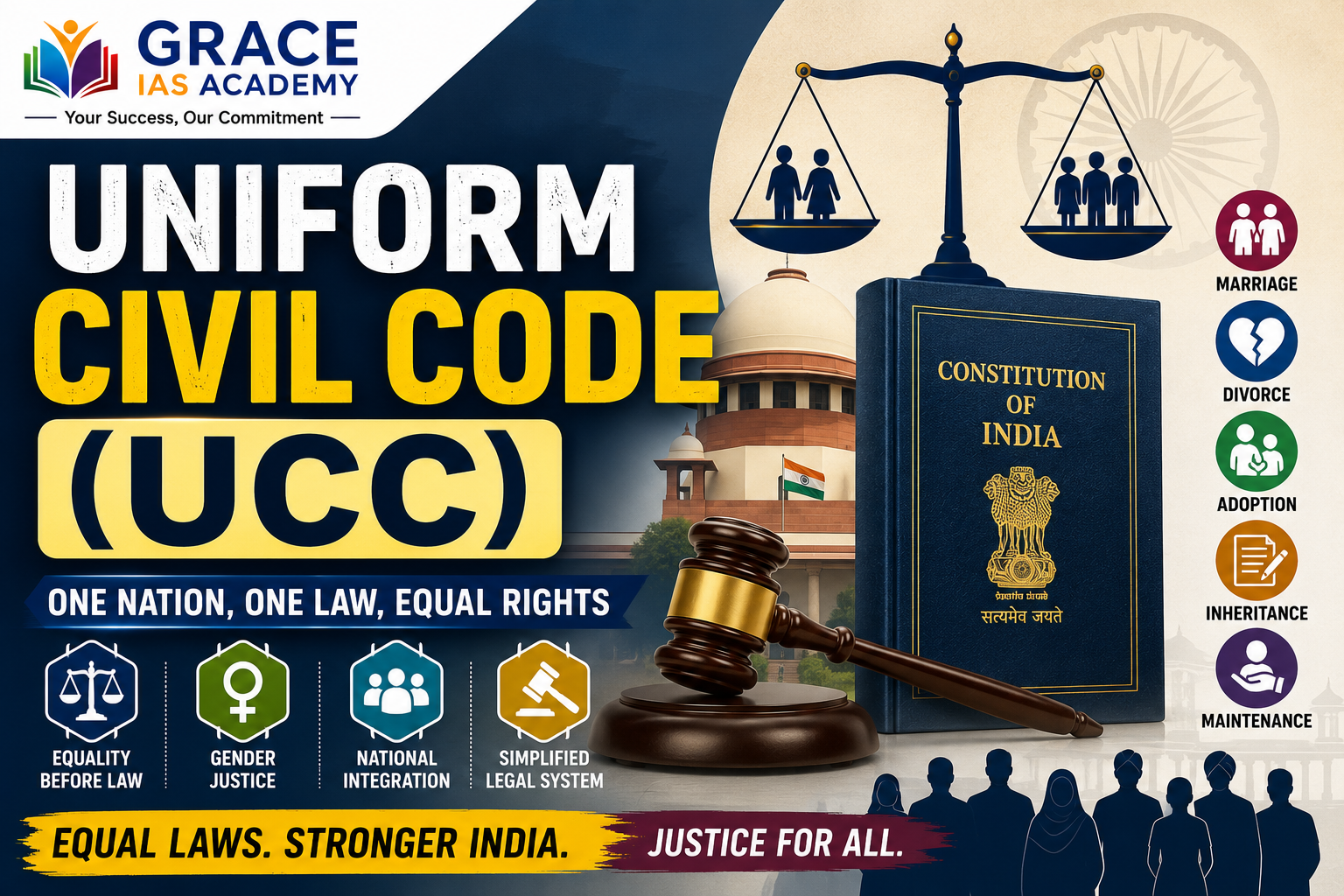
Uniform Civil Code (UCC): Meaning, Importance, Challenges & Impact
The Uniform Civil Code (UCC) is one of the most debated constitutional and legal reforms in India. It seeks to establish a common set of civil laws for all citizens, irrespective of their religion, caste, or community. The debate surrounding the UCC revolves around balancing equality, secularism, religious freedom, and cultural diversity. Due to its constitutional significance and frequent appearance in current affairs, the Uniform Civil Code is an important topic for UPSC and State PCS examinations.
What is the Uniform Civil Code (UCC)?
A Uniform Civil Code refers to a common legal framework governing personal matters such as:
-
Marriage
-
Divorce
-
Adoption
-
Inheritance
-
Succession
-
Maintenance
At present, these matters are governed by different personal laws based on religion, including Hindu, Muslim, Christian, and Parsi personal laws. The UCC proposes replacing these separate personal laws with one uniform civil law applicable to all citizens.
Constitutional Basis
The idea of a Uniform Civil Code is mentioned in Article 44 of the Indian Constitution under the Directive Principles of State Policy (DPSP).
Article 44 states:
"The State shall endeavour to secure for the citizens a Uniform Civil Code throughout the territory of India."
Although Directive Principles are not legally enforceable, they serve as guiding principles for governance and policymaking.
Why is UCC Important?
Promotes Equality Before Law
A common civil code ensures that all citizens are treated equally in matters of personal law, regardless of religion or community. It strengthens the constitutional principle of equality under Article 14.
Ensures Gender Justice
Supporters argue that certain personal laws contain provisions that may result in unequal treatment of women. A Uniform Civil Code can promote equal rights and greater legal protection for women.
Strengthens National Integration
A uniform legal framework encourages the idea of common citizenship and reinforces national unity while reducing legal differences among communities.
Simplifies the Legal System
Multiple personal laws often create legal complexity. A common civil code would make civil laws simpler, more transparent, and easier to administer.
Challenges in Implementing UCC
Despite its advantages, the implementation of UCC faces several challenges.
Religious and Cultural Diversity
India is a multicultural society with diverse customs and traditions. Many communities view personal laws as an essential part of their religious identity.
Fear of Loss of Cultural Identity
Some groups believe that a common civil code could interfere with their traditional practices and religious freedoms.
Political Sensitivity
The issue has significant political implications and often generates intense public debate, making consensus difficult.
Need for Broad Consultation
Successful implementation requires dialogue among religious communities, legal experts, civil society organizations, and policymakers to ensure that all concerns are addressed.